
Building a Foundation for the Future
Owning a home is not just about having a place to live; it’s about building a foundation for the future and creating a legacy for generations to come. That’s why we’re dedicated to partnering with Black individuals and families on their journey to homeownership through our Pathways to Homeownership™ program.
The Pathways to Homeownership™ program is designed to provide support, resources, and guidance every step of the way—whether you’re dreaming of owning your first home, or looking to make a move into a new space. Our team is here to help you navigate the process with confidence and clarity.
Get Involved
-
Get Started
-
How to get started:
1. Complete a brief intake form
or
2. Drop by the Tacoma Urban League to visit with one our housing counselors.
-
Sign up for the Newslettter
-
Subscribe to our monthly Pathways to Homeownership™ eNewsletter for the latest homeownership tips and loan guidance delivered right to your inbox.
Here’s what you can expect from the Pathways to Homeownership™ team:
- Education and Counseling: We offer workshops, seminars, and one-on-one counseling sessions to help you understand the home buying process. From financial health to understanding mortgages and closing costs, we’ll equip you with the knowledge you need to make informed decisions.
- Financial Assistance: We understand that one of the biggest barriers to homeownership can be financial. That’s why we help our clients to understand the different programs, grants, and low-interest loans available to help overcome financial obstacles and achieve your homeownership goals.
- Community Support: Building a supportive community is essential on the journey to homeownership. Through networking events, support groups, and online forums, you’ll have the opportunity to connect with others who are on a similar path, share experiences, and learn from each other.
- Partnerships and Resources: We’ve established partnerships with real estate agents, lenders, and other professionals who are committed to supporting Black homeownership. Additionally, we offer access to valuable resources, including homebuyer guides, checklists, and toolkits to streamline the home buying process.
Together, let’s build a future where Black homeownership thrives, and communities flourish. We’re excited to embark on this journey with you!
Visit our blog to learn about the origins of this collaborative program.

Black Business Spotlights
-
Interview with Tamica Gant, founder of Abundance Health LLC
-
S: All right, so thank you so much for coming. We are going to be interviewing you for a Black Business newsletter, so I wanted to first start out with, What is your name
 or how you would like to be referred as if you have a nickname that’re referred to in the community, and then what’s the name of your business?
T: Yes, my name is Tamica Gant, and my company’s name is Abundance Health, LLC.
S: Okay. Awesome. And then, What products or services do you offer?
T: We provide private duty nursing, registered nurse delegation, services to our community in Pierce County, King County, and also the surrounding counties. We also host community seminars, one of our previous ones that we had was back in April, and we partnered with Gilead Sciences, which is a pharmaceutical company that produces HIV medications and prep and PEP and things of that sort. The class was called Let’s Talk About Sex, and it was to combat the increase of HIV rates that are increasing within King and Pierce County. So we recently had that class. We also host our annual BIPOC Health and Wellness Fairs within the community. And we give out scholarships to individuals that are pursuing a degree in health and or wellness.
S: Which I think is awesome. One of my friends actually won the award.
T: Oh, was it? Malcolm. Oh, nice! I was so actually came in first. He got the most. He’s so heavy? He was so deserving of it. And I’m so happy that he was chosen to. We actually had a scholarship committee. So I just wanted to remove myself from the bias because I know I would have picked a certain group of people, you know, or my friends or family that applied, but to keep it all equal, we had three individuals that were able to do that. So we’re excited..
S: So, thank you, because that’s awesome. I didn’t even know he applied for it. And then I heard his name was like, wait, I know this person. So thank you for all that you, you do for the community. That’s awesome. Thank you. Thank you. So I guess you kind of touched on it a little bit, but like What inspires you to pursue this passion and kind of how did this all start up?
T: Well, to be honest, I grew up in a single parent home, a family of four. So I came from struggle, right? I came from public being on public assistance. I was a teen mom, Homeless at one point in time, too, from when we had a house fire. and going through all, you know, those difficulties, those trials, really shaped, you know, what community meant for me, because community, you know, really stepped in for me at that time. When I actually needed it. So I really see this as a way just to give back to my community and also a way to pour into them, to show them that they don’t have to stay where they’re at. They can come up too.
S: That is beautiful. I feel like we align in that too, ’cause we’re all housing counselors, but we’re also financial coaches. Yeah. And so. like financial trauma is very real, especially in the community of color. And a lot of times people are, they’re stuck because of what’s happened to them. And so how can we encourage them and motivate them? Like, you don’t have to stay stuck where you’re at, like we’re here to support you.
T: Absolutely. And I think it also helps the community, seeing someone that’s been there, done that. Because, you know, it’s like a lot of things, you know, people may go through certain things and it’s like, well, if you haven’t really been there, done that, how can you actually, you know, relate to what I’m going through or how can you actually help me out of my situation? So, you know, I use my struggles as a stepping stone and also as leverage for the community, you know, to be able to relate with them personally a more in- depth level.
S: That’s beautiful. So, this, I hear the passion, I’ve seen the passion at the BIPOC wellness fair. It must be a lot for you, like personally. Or just you’re investing so much of your time, energy, effort, like, how do you stay grounded? How do you pour into yourself to make sure that you can continue going forward as a business owner?
T: To be honest, my faith. My faith is a big stance in how I’m able to be grounded and how I’m able to stay grounded. Also, my team, right? Like I have a huge support team. My family, not only my family, but my church family as well, like they represented and came through for the BIPOC Health and Wellness Fair and other things that I do too. Having that support system is important. It’s it’s so beneficial in so many other, you know, levels. And having that support system, allows me to be able to impact the community in a greater way because while I can delegate certain items, I can, you know, reach higher and go higher to help out the community. Also, making sure that I have me time, like that is important. And making sure that not only am I taking care of the community, because if I’m not taking care of, the community’s not taken care of. So I making sure that I just have time for myself as well.
S: Awesome. Selfcare is important.
T: Absolutely.
S: So what would you say makes your business or the services that you provide unique? Well. Or different from how other people are doing it.
T: Yeah, well, we offer a lot of inclusive services. So not only nursing services, but we are contracted with DSHS, so we provide the registered nurse delegation Services, which is taking care, well, providing teaching, educational services to the caregivers, teaching them how to provide certain delegable nursing tasks to the patients. Also private duty nursing. So to decrease the increase of hospitalizations, what we do is do in home care. So patients that are on traits, ventilators, chronic health care issues, or even having, you know, central lines or IVs, things of that sort, we are able to provide the service in their home. So that definitely plays a part where people can enjoy their home and really have the nursing services that are needed within the comfort of their home. I worked recently, well, some years back when I first started nursing, before COVID, maybe in 2016, I started off at a skilled nursing facility.
S: Oh, okay.
T: And being there and working there with a lot of the patients, they all wish that they could be at home and receive those services. So that’s kind of what started that up. Also, we are about community. So, you know, it’s not only the in-home care services, but also we are, you know, making sure that we are capturing our community as well and providing the services that they need. Because if we don’t provide that for them, they will end up in the hospital or they will end up in certain situations where they need additional services for care.
S: Yeah, I will definitely say I’ve never seen any organization like yours and like, again, I’m just drawing back from the BIPOC wellness fare, but having a panel of like different medical professionals, that was the first I’ve ever, it was like, it was giving TED Talk. That was the first I’d ever seen of that. And I was I was like, wow, I wish more people would do that because I have so many questions. I have. And like, it was different healthcare professionals from across the spectrum. Like, it wasn’t just one. And I thought that was. I thought that was one amazing, so needed, and I think I was just in shock because I’d never see, like, I never thought anybody would care enough to do that for our community. But of course, someone from our community would care. So I can’t thank you enough. That’s just beautiful. Thank you. Thank you.
T: I appreciate it. It was important to really capture, you know, not only trusted healthcare providers, but some of the providers that even look like us, right? That are from our communities and things of that sort. And I got the idea from the Pierce County and King County Health needs assessment. So that was another updated survey was recently done. And the whole fair was shaped around that. So I was really particular in who who was invited, regardless if it was vendors, panelists, services that were provided, I obtained the information from there, and then that’s how we kind of shaped, you know, the entire fair. So I seen that diabetes was an issue. So we had a clinical pharmacist that was that majorors in diabetes and endocrinology. there to provide those services. Also, HIV is going up in our community. And Pierce County, it’s the second highest, like, as far as the rates in King County is the highest. So that’s a major concern. Like for our community in general. So I made sure that we had a nurse practitioner there to teach on that. And also someone from Gilead Science to be able to teach on different, you know, information about HIV or even medications that can help us preventatively or if we were exposed to it. So in a lot of our community is not educated when it comes to stuff like that. And that’s really important. Even when it came to mental health, we had a provider there. When it came to basic chronic healthcare issues, whether it was a stroke, hypertension, diabetes, whatever the case may be, I just wanted to make sure that we were represented in every aspect. So everybody could get with at least a piece of what they need. And the questions that were formulated were, I created them because I created them as if I was the community member seeking information. So I know where to go after this or I know what steps to take after this. Or I’m just educated, you know, and I can pass that in information along to my community or my loved ones. For sure. So that was important to me. And a lot of times, you know, within the black community, we’ve been, you know, harmed when it comes to health care or, you know, different things of that sort, historically and all. Even up until this point. So it’s important for us to have people that look like us, to bridge the gaps in healthcare, to build those trusting relationships.
S: Well said. Hear, hear. So kind of shifting gears a little bit in, you recently just had the Bipoc wellness, fair. We talked about that extensively. Are there any other special promotions or like events that you’d like to highlight that you would like for us to shout out?
T: So, as of now, we are taking things really slow, because that BIPOC health and wellness fair… It was a lot. But we are going to be collaborating with Gilead Sciences again, to have another class called “Let’s Talk About Sex”, to help with the increase in HIV that’s going on. So to really educate people, I actually just received an email today from her. So we are going to get that back up, but I think we’re gonna expand that, not only to Pierce County, but King County as well, since that is the highest rate of where the most cases are. But I think it’s going to be a back, not, I think, I know, it’s going to be a back and forth collaboration where, you know, at one point in time, we’re going to do things in King County. And we are also going to collaborate with Parks not only Parks Tacoma, because we’ve been doing that, but also Seattle parks and Rec.
S: Okay.
T: So it’s going to be a lot. I’ve spoke with a couple employees at the Seattle Parks and Rec and they had told me that what they plan on doing is inviting all of the community centers at Ray, all of the community centers and inviting them to Rayner Beach Community Center to have this happen at our class. Let’s talk about sex. So, not as of now, we don’t have a date aligned, but that is something that is going to be up up and coming because it’s just near and dear to my heart and people need to know.
S: Yes. Well, it’s on the horizon. So let us know when it happens. Feel free to give us information about it. We’d love to share it out with our community and our network as well, because it obviously needed.
T: For sure.
S: But, again, switching gears a little bit again. So like I said, we’re housing counselors and financial coaches, so it would be remiss if we did not bring up the topic of homeownership.
T: Yes.
S: So for you, what does homeownership mean?
T: For me, it means freedom and access. I remember when I first purchased my husband and I first purchased our home and that was in 2017. And when I tell you that shifted, our outlook on life, our purpose, and how we are able to be an example, not only to, you know, our community, but our children, to show them that this is what’s needed. And, you know, now, you know, thankfully. And I say this so humbly, we’ve owned three homes and I’m excited about that because you don’t really see that within our community. That’s to be. Yeah. And I’m grateful. I’m so grateful for it because like I told you guys, I didn’t start off like this. Like, I did not. And to be honest with you, that it’s not some, it’s not how I grew up either. It’s not like, oh, I’ve seen these people having all these homes or, you know, doing this and that. I didn’t see that growing up. So, to be able to be surrounded by a community that did show me that I’m beyond grateful, beyond grateful, because not only is it, you know, an asset, but it shows my, to be honest, it shows my family and my children the possibilities of life. The possibilities of life. And I’m just grateful, you know, to be able to do that. So home ownership is definitely freedom and its access. And I encourage it. And it’s just needed it. It’s needed.
S: We are in agreement on that. And so last question is about not home ownership, but home, because the word home can mean different things for everybody. But what for you do you love the most about your home?
T: I love that it’s a home where when people step in, they can experience peace, love, joy and not only that, but I love that it’s surrounded by who I consider community, what I consider community. And I just feel like that’s so important with picking out a home and cultivating and even nurturing your home.
S: Beautiful. So like short sweet to the point, these are all my questions, but I did want to give space to ask if there’s anything else that you’d like to share with the community that might not have been reflected in these questions. This is your time, this is your space, this is the platform for you.
T: Hmm. I just always like to encourage community, to continue to pursue after their goals, their dreams. And I know it’s so cliche that the stars, the sky is the limit. But it literally is. And take my story, take my experience, and allow it to allow it to be of assistance for you. Take and grab whatever information relates to you, pertains to you. And just use it to encourage you to be where you want to be and to elevate to where you need to elevate to. But I just want to encourage the community just to keep on going.
S: Nothing better than ending it with words of encouragement. How can people connect with abundant LLC? Was there website? Do you have an Instagram or handle?
T: Yes, absolutely all the things.. So individuals that want to connect with us, we do have social media, Instagram, and Facebook. And that is at Abundance Health LLC. And also we do have a website that is www.abundancehealth LLc.com.
S: Okay. Abundance. I like it. It’s the same across. You can’t get confused.
T: And thank you guys so much for allowing me to be here, to share my story, to be an example for community. I just want to be a light. That’s it. That’s it. That is it. So thank you for the opportunity and just for allowing me to be here.
S: Well, you are a light. Yeah. So this is Monique’s first time being a part of a business interview. So she’s shadowing me, so hopefully she can take the reins. But I also wanted to give you space to see if you had any questions that you wanted to ask.
M: Um. Do you, I think of what you close with was motivational to all people, not just our community, even though this newsletter will be for us by us. Do you have anything specific to say? Because like you, I love our, I believe our young generation is our future. So do you have anything specific to say to those that are to our young community that will that just once or even have any idea when it comes to healthcare, anything specific to them that you want them to know.
T: don’t give up in spite of, you know, whatever it is that life is thrown at you, don’t give up, continue to move on. And if mistakes happen within that time period, keep on going because, I mean, it happened with me being a teen parent and I didn’t allow my circumstances to define me. And my main motivation was that I just didn’t want to be another statistic. I didn’t. I couldn’t. And I, I owed that at least to not only myself, but for my kids, I owed that to myself and my kids. So just continue to keep on pushing, no matter what, you know, comes up against you. and keep the faith.
S: That’s it. That’s it. That is the all. Mic drop, that is it. Yay! Thank you so much.
-
Interview with Quincy Henry, Owner of Campfire Coffee
-
Mo: Well, thank you so much for coming in today. I’m super excited by our conversation. Quincy, here at the Tacoma Habitat for Humanity ™ one of our goals for Pathways to Homeownership ™ is to encourage
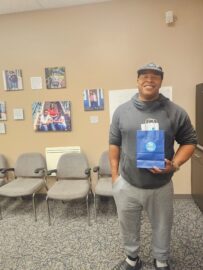 and uplift our community. We wanted to invite your business to be highlighted, so let’s dive deep, ok? Please let our listeners and readers know what is your name, how you would like to be referred as, and the name from your business as well.
 Q: Yeah, so, um, Camp Fire Coffee is the name of the business, and my name’s Quincy. Everybody calls me Q. Uh, yeah, Quincy Henry, my wife, Whitney, and I, are the owners of Campfire.
Mo: Awesome! shout out to Whitney. She wasn’t able to be here today, but she’s here.
Q: Absolutely.
Mo: Here in spirit.
Q: Okay. She made it so that I could be here!
Mo: Yes! Awesome. Well, welcome, welcome, welcome. Super excited. Please let the people know what products and services do you have to offer to your community?
Q: Yeah, so.. the easiest and probably the most recognizable is that we have a coffee shop on the corner of 17th and Market. We also have a coffee shop in the Tacoma Public Utilities Building, but beyond that, you know, and we roast coffee and we’re in a bunch of grocery stores. We’re in Trader Joe’s, in Washington, Oregon, Idaho, we’re in some Hyatt hotels, Salish Lodge and Spa up in Snoquami, Marlene down here in Tacoma, Stockless Goods in downtown Tacoma. There’s a lot of mom and pop stores that carry our coffee. So, we’re coffee roasters, but really are business is more about being advocates for outdoor diversity in equity. We just use coffee as a vehicle to tell that story. So, our real thing is, you know, living that. Just finding ways to make the outdoors more accessible for more people just by trying to, you know, create space and what better way than through coffee, right?
Mo: Yeah.
Q: Everybody here drinks coffee.
Mo: Sure.
Q: Not everybody here, especially those that look like us, take advantage of the natural world that is around us.
Mo: Sure. I love that. Like I have said earlier, I wasn’t familiar with Campfire, but I was invited for coffee, there for a meeting and I immediately was like, “This is fun. Right? You go in and it looks very much like a outdoor experience. It immediately gives you cozy, outdoor, feelings. And I just love the way the atmosphere is- super, super fun. I would encourage everyone to take a look- see, take some pictures, go, take a selfie, because it’s super, super cute, but what inspired you and Whitney to pursue the passion into the coffee business?
Q: This is the fun part of the story because people tend to I think, assume that this was like, a big dream or goals of ours-when it wasn’t. Okay. We really just needed jobs at the time. I had been working as partner in a marketing agency in Seattle. That went sideways. Whitney had just transitioned out of the army and was working in mental health counseling and got of attacked by a patient. {Timeline} I got let go from the marketing agency in July. She got attacked in October, we spent that November with her family, for Thanksgiving.
Mo: Okay
Q: And on the drive back home from Utah, {Whitney’s dad retired after the Air Force there, and that’s where she went into the army}, we’re driving home from the Hill Air Force Base area, and just trying to figure out what we were gonna do, and camping had been a huge part of our relationship. You know, we got engaged on the camping trip. All of our kids have been camping by the time they were about a month old. We kind of became the de facto camping guide for our family and friends.
Mo: I love that.
Q: Mm hmm. And so, we were like, hey, like, let’s start a coffee shop. Because we all, that was the one constant. We always had the coffee. That was our rituals. We always look forward to that coffee around the campfire in the morning. And so, we decided on that drive home that we would start this business that was based on that.
Mo: Yeah
Q: All of those things, you know, just getting outside, having a good coffee, spending time with people. And this was 2018, so this is prior to, you know, the pandemic or any of that. We just knew that that’s that was something that she and I shared and that we could authentically tell that story better than anybody.
Mo: Right, it was yours.
Q: We weren’t trying to be something we weren’t; we didn’t want to try to be this thing. Like, let’s just share who we are. And so, yeah, that’s how campfire was born and, you know, it’s evolved over time, it’s changed so much. Our original plans have, you know, you look back and its so much different now than what we thought it was gonna be. But still just living out that original idea of: you know, A) we got to take care of our family.
Mo: Yeah
Q: We’ve got three babies. That was, like, the first thing that we said, you know, we got these three kids. You know, at the time, we had the mortgage and two car payments and all this stuff, how we going to pay for these things? And then it was like, well, B) let’s just be who we are.
Mo: Sure. I love that. It kind of seems like family keeps you grounded and to stay positive, because you came in the door with high energy. If not, can you tell me what’s it like keeping that positive attitude as a business owner, knowing you have the bills? You have the expenses, you know, increasing. Tell the readers and myself, what is it that keeps you grounded and to keep that high in energy positive?
Q: Uh, you have to be intentional about it.
Mo: Sure. Yeah.
Q: Um. I don’t do a great job of it, but I try to start my day the same way I end it and giving thanks for another opportunity. And people ask me how I’m doing, I’m like, I’m alive and breathing. I’m on this side of the dirt. You know, that’s a blessing. I’m the youngest of five boys and during the pandemic, we lost our older brother unexpectedly to COVID and I’m sure he did not anticipate going out that way, you know? So, it’s just a thanks and appreciation for another opportunity, because it’s hard. I mean, it really is difficult and Campfire is coming out of a really dark and difficult time in the business, some hurdles and some hardships that we’ve had to navigate that just, they don’t even seem real. When Whitney and I talk about it, it’s like, we know people go through stuff… but the stuff that (we) Campfire has had to go through and that we’ve had to navigate this company through- is, it is insane. But we’re still here.
Mo: Yeah, and growing!
Q: That’s kind of the thing. It’s like, you didn’t come this far to come this far.
Mo: Yeah, yeah, there it is.
Q: You know and so you got to just keep going. You got to honor those that came before you to help put you in the position to even be able to do this. We’re fortunate. Even though we’re not home owners currently, we live four doors down from my mom and dad and they are firmly in their 70s now, you know? And they tell stories of a different time in this country that don’t seem too different than what we’re going through currently. But I think about those stories and it’s like, y’all endured it a lot worse back then- that I think, if I could just endure this like their parents did, and their parents did as well.
Mo: Right.
Q: So, yeah, I feel honored. I feel like it’s a real blessing that, you know, we can have this business that’s growing with all the right heartened intent in place, we just got to keep trying to steward it. On the right path.
Mo: That’s it. That’s definitely a word. Okay, so, like you said, you have a business here in Washington State built on genuinely, love and campfire. You know, that’s not completely unheard of here in Washington State. But what is it about your business that makes it different and unique?
Q: I think there’s a couple things. We roast the coffee over, essentially a campfire.
Mo: Awesome!
Q: That’s how we got started- in the backyard. Well, that’s, you know, what we thought we were doing versus what happened. We did not intend to roast coffee. My sister-in-law was the one that suggested we give it a try. After every roaster I reached out to blew us off. So, we were in the backyard with a popcorn shaker over the fire pit and I designed our roasters now to where the coffee’s still, essentially is roasted over a fire. and there’s no fossil fuels in that. And that’s a whole different story, the whole fossil fuel free part of the coffee roasted, I won’t get too deep into that, but, you know, there’s been this growing movement around, you know, just being aware of our fossil fuel usage and its impact on the environment. Coffee is the second highest traded commodity in the world… Behind fossil fuels…
Mo: Wow
Q: What isn’t talked about a lot is that coffee is also one of the highest consuming industries that uses fossil fuels. To create the roasted coffee, a lot of these roasteries are powered with gas. Whether it’s natural gas or propane, a lot of roasters use that probably coasted 99% of the coffee market. You are consuming a product that was made using a lot of fossil fuels, and we don’t have any in our process.
Mo: Interesting
Q: So, you know, the whole story of being around the campfire, like, there’s that part of it. But also, I think what makes us really different is the mission is really wrapped into the business. Like, absolutely, we got to make a profit, and we’re not a charity, but I think the best way that we can make a difference is that we operate by what’s called a triple bottom line and that is where you’re profitable, you’re still a business and you want to make money, but you also measure your success by how you impact the community and the environment. So, there’s the three bottom line approach. And for us, it just so happens to be that our community impact is central to our business. How are we getting people outside? Even if it is just by, you know, you walk in and you are now inspired just by the space to think of being outside. Even if it’s just planting that seed now, there’s no way for us to measure that. But our whole goal is always been: how can we own the journey for people, how can we get them to go from being inspired to get outside, even if it’s just on a walk? You don’t have to go climb Mount Rainier tomorrow because you came to Camp Fire. But if you walk into the {Camp Fire} space and you say, yeah, I want to go to a Point Defiance, or I want to put the tent up in the backyard this weekend, then you get your coffee. If I happen to be behind the bar, which is rare, but I do get it from time to time, when I’m at the shop is: where do we go ride our bikes? Where can I get gear? And that’s the other part. So, when we started, we started campfire coffee pretty soon after we started getting hit up by a lot of companies to support them. So, we started fundraising through coffee, and we ended up working with a lot of, you know, U.S. rowing, and Boys and Girls Club for their certain outdoor programs, or YMCA camps or Camp Fire, which is you know, a national organization, and we started doing coffee fundraisers, we would already be selling the coffee, you know, we hosted on the site, whatever we sold, we’d give them half proceeds. So, kids that were all waiting lists or whatever it was, scholarship programs you can fund that. And then for the people that were local- we have a free gear library. No questions asked. You want to go camping? All I need to know is when you need it and for how long? We got a tent, sleeping bags, cots, fishing gear, camp kitchen equipment, you know, outdoor water, water equipment, kayaks, so people can try the activities without any barriers.
Mo: That’s awesome.
Q: So, yeah, it’s just what we wanted to be a part of -it’s part of how we operate every day. And then, by the way, yeah, like, here’s a cup of coffee, too.
Mo: Sure. That’s just top tier. Just amazing. I’m just super excited. Do you have any special promotions that you would like to highlight today?
Q: Uh, I really want to keep gear library high. We always have specialty deals going on. You know, the new fall menu, all of that, but I really want to encourage people as we are beginning to the colder seasons, to still come and check out gear from the Gear Library. I would love to be able to connect people with some of the guides and programs that we work with, or that we sponsor, to try out some of these colder weather activities. You know, the outdoor recreation space isn’t just for good weather. We live in an area with awesome mountains and year- round activities, and there’s a lot of great BIPOC led or Allied led instructors and small organizations that have programs that can get you out for your first snowshoeing or skiing trip or whatever it is in cold weather. So, yeah, come check us out or reach out online and let us connect you to some activities.
Mo: Yeah, that’s amazing. We’ll definitely be excited to support that. Of course, at Habitat for Humanity the center of conversation will always go back to home ownership, especially affordable homeownership. Quincy, I’d love for you to tell us what does homeownership mean for you?
Q: It’s so big! For my wife and I, we did own a home, which we purchased through the VA program.
Mo: Awesome.
Q: We ended up selling that to kind of get campfire going. It is the single goal that I want to get back to in this life: owning a home again. And I’ve been trying everything in my power to get there. As a business owner, you know, the funding programs are different. We learned that pretty quick. Once we started making a little bit of money, we figured, okay, well, we’ll just go use the VA again. The interest rates are really cheap, let’s go get a house.
Mo: Sure.
Q: However, we could not get one. In that time, you know, I went and bought a couple of small pieces of land; one here in town and one over in Hawaii {to try and grow coffee on} and figure, well, maybe that’s, like a back doorway into getting a home. I thought let’s buy the land through seller financing- and buy really cheap, and then maybe we could leverage it and still it’s even harder. So, homeownership means a lot. It means so much to me because of the parents I have in my life, right? I’ve seen two sides of that coin. My wife’s parents, they were military. So where ever they were stationed, they were able to utilize VA. We bought our first home, we bought it using the VA. It was the most amazing feeling to come home and know that this is yours. On the other hand, my parents struggled to buy their first. They didn’t buy their first home until I was in high school, which was 1999-2000. They had always rented every two to three years. We were moving. My parents worked hard and they saved. And even that almost got derailed because of 9/11, and my mom was trying to pull money from her 401k for the down payment. So, I’ve seen both sides of the homeownership thing. It is the one thing that motivates me to get up and go to work every day.
Mo: Yeah.
Q: It’s owning a home again. It is not only just the pride and ownership, but also, you know, we’re in a townhouse, we’ve been in a townhouse for the last, oh, three, four years, and our kids our preteens in early teenagers. Well, when we rented that townhouse, they were little. They were babies. And so the space worked. They were tiny. right? And so, the space worked, and now we’re at a point where we’re like, oh, you know, we got a 13-year-old, 11-year-old and nine-year-old. They’re big kids now. They need space. And so, yeah, it’s like, we got to figure out a way to get some more square footage.
Mo: Sure. Right. You know, for us, we understand homeownership and one thing I like to say is, “everyone may not be ready for home ownership, but home ownership is for everyone”, right? And for some people, based on their current home journey, renting works. It just pans out that way. Regardless of what the goal is, right now, this is our situation. So, I would like to end our interview by asking, what do you love most about your current home?
Q: I love a few things. One is that we are a close family. Like I said, we’re four doors down from my parents. We’re less than a three-minute drive from my other brother. So, we all still stay. And that’s kind of how we came up. My family moved here from Alaska. And when they moved here from Alaska in 1979 or ’80, it wasn’t just my family, it was the whole family.
Mo: Wow.
Q: They had moved from the D.C. area to Alaska as a whole family and then they moved from Alaska down here as a whole family, so like this big family unit is all I’ve known.
Mo: I love that.
Q: That’s why I admire Whitney so much because she’s so much the backbone of keeping Camp Fire going, but she also makes the house feel like a home, even though it’s cramped and we got the one butt kitchen, she sets the vibe, every single day. You hear the kids out in that little front yard, still playing, running up the steps, laughing and giggling and it’s because of the vibe that she set, no doubt.
Mo: Awesome. Well, Quincy, thank you so much for joining Tacoma Habitat for Humanity to learn more about Camp Fire Coffee. Huge shout out to Whitney and thank you so much again.
-
Interview with Happy Bracelets by Davinee
-
Mo: Good afternoon. Thank you so much for joining us today. We are super, duper
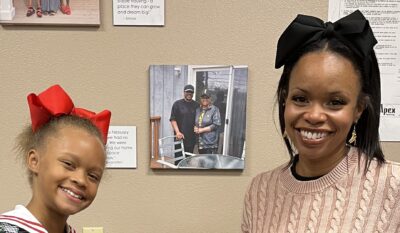
excited. For all of those listening, my name is Monique Dorsey. I’m one of the housing
counselors here at Tacoma Habitat for Humanity, and I am joined by one of our younger
members. Please tell us your name and if you have a nickname or if you have a
preference, as well as, introduce your business to the audience.Davinee: My name is Davinee, and my business is called Happy Bracelets by Davinee.
Mo: Yes, Happy Bracelets by Davinee! They are super adorable. I just want to go ahead
and say, I definitely purchased from you and I got a lot of compliments. I want to put that
out there. But, of course, although it’s in the name, what products and or services do
you offer the community?Davinee: I make water bottle charms, bracelets and phone charms.
Mo: When I first met you- you had so much at the TAPCO event. So much good stuff! I’m really glad I didn’t have my kids because they would have been bugging me to just buy the whole table. You had amazing things that I would love as an adult. I just want to put that disclaimer out there and this prompts our next question: What inspires you to pursue the passion of Happy bracelets by Davinee?
Davinee: Well, I really like jewelry and stuff, and I also like making jewelry. So, that’s
kind of what inspires me.Mo: How did you start? Were you making it for yourself and your family members, or did
that just have a life of its own?Davinee: Well, I kind of was just like making them for holidays and stuff, and I kind of
wanted to sell them so I didn’t have just like so many.Mo: Yeah, that makes so much sense. So, you have a lot that’s yours, but then you’re
like, you know what? Might as well just, you know, give my loved ones some good stuff
too.Davinee: (shakes head yes)
Mo: Awesome. I love that so much. So, I’ve been an entrepreneur in my past life, but
being a business owner was not easy. It’s difficult! For me, it, it was one of them things
where you just had to manage quite a bit, on top of being the creative, right? But you
had to be able to manage your business. What practices do you use to keep grounded
and stay positive even when everything’s going crazy?Davinee: Well, sometimes listening to music helps.
Mo: Uh-huh. What type of music do you like listening to?
Davinee: Pop
Mo: Yeah, for sure, because it’s high energy, so I can imagine that’s pretty cool. Are you
able to listen to pop while you do your homework? Or you can’t think at the same time.Davinee: Sometimes.
Mo: Okay, see, you’re amazing, I can tell. Okay, so next question. What would you say
makes your business different or unique compared to other businesses?Davinee: Well, usually when someone has a bracelet business, they only sell bracelets.
Mo: Mm hmm.Davinee: But I sell water bottle charms and phone charms, too!
Mo: Right, because that’s what I had got was the phone charm, and I think that’s what
got people’s eyes. Like, what is that? Because I was constantly fidgeting with it. Again,
super adorable. It was super cute and creative. OK! Do you have any special promotions right now that you like to highlight. Anything that you would want to tell the audience to keep a lookout on?Davinee: I may come out with scrunchies, like crocheted scrunchies.
Mo: Oh, yes. You are so creative. I can’t. Okay, I’m fan girl-ing right now. Okay, I love
that. Okay, so we’ll make sure that we highlight the fact that you have scrunchies coming out. Keep a look at all you tumblers, cheerleaders, band geeks, just everyone its on the way!Samantha: And the regular folks!
Mo: Yes, and the regular folks! Okay, so, like I explained earlier, here at Habitat, our center of all things is homeownership. You explained to me that, you know, one of the things that that you love
most about being able to go home was just, you’re able to chill. It’s your space, you’re comfortable, right? But what does home ownership mean to you? I love to hear this from a young mind.Davinee: Owning that home.
Mo: Yeah. It’s yours, right? Nobody can take it from you. And then what is one thing that you, outside of chilling, what is one thing that you can say you love to do at your house?
Davinee: I like to do flips at my house.
Mo: Mm hmm. Like off the porch or something?
Davinee: Just in the living room.
Mo: Just in the living room. I see, you know what? You might can’t do that at just
anybody’s house. You can only do that in yours, because at an apartment or if you live
upstairs from someone, you might wouldn’t be able to do that. So, that’s a really, good
point to ownership, I would think. And what do you love the most about your particular
home?Davinee: That it’s like a safe place.
Mo: Yeah. I love that. I love that so much. You know what? Safety is one of the needs for homeownership, especially for Habitat homeowners. Like, that is one of the things
that a lot of people are in search for ownership. Somewhere that they can be calm and maybe do some flips too. So, I’m just super excited. I’m so glad you was able to make it and be able to speak the home ownership for your community and before you leave, do you have any last words or any motivation for the young readers today?Davinee: Just never give up.
Mo: Yes. Just never give up. Thank you so much. How can we connect with you? Where can people get your products? website, Instagram, or whatnot?
Davinee: Um, On Instagram, my user is @Davinee15. At Davinee15 on Instagram.
Mo: Okay. Instagram- they can just hit you up and say, hey, I want to buy some
bracelets?Davinee: Yes, but I also do, like, markets around Pierce County.
Mo: Oh, awesome. Is there any particular way that we know where you’re going to
be at next?Davinee: I post them on my Instagram.
Mo: Awesome, awesome, awesome. Bree (mother of Davinee), do you have any final
reflections today?Bree: Sure! When we were driving here- I was trying to prepare her for the questions
you may ask: “they might ask you about buying a home or something like that”,and it just didn’t resonate with her (Davinee). That’s because she’s lived in our family home, since she was born. Even her grandparents owned homes, so it just was kind of like a natural thing for her. However for me, I grew up in a fourplex and my mom always said, “you know, big milestones are getting married, having a baby, and buying a home”! I know it’s super important and you guy’s work. My in-laws have utilized Habitat! I’m pretty sure you guys, redid their porch or deck, something like that. But yeah, it’s just super amazing what you guys do. I didn’t even realize there was a store attached, so that’s pretty cool, too.Mo: Yes! I love that so much. Well, I do appreciate you guys for sharing. Please follow
Davinee on Instagram, on her socials, and be on the lookout for scrunchies. They on
the way!
{Bree noticed her in-laws pictured on the wall of Tacoma- Habitat showcasing her newly
renovated porch!} -
Interview with Quinton Gathers, Owner of Hot Fish House
-
Mo: All right sir, let’s get started. I appreciate you for taking the time out of your busy day. I did
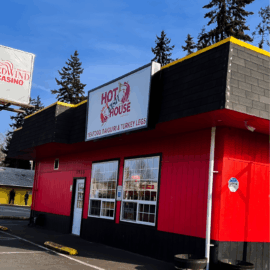 notice that you have an event this evening so I won’t take too much time from you, but let’s go ahead and dive right in! Please tell the listeners and the readers what is your name, as well as, the name of your business?
 Q: Okay, uh, my name is Quinton Gathers. I’m the owner of the Hot Fish House here in Lakewood, Washington. We’ve been open for about three years.
Mo: Awesome.
Q: That’s who we are.
Mo: Yes, well, congratulations, three years and booming!
Q: Three years and booming.
Mo: Yesssss! Tell us what products and services you have here.
Q: Uh, products and services are wide ranges of seafood. Our number one seller nowadays is the catfish, runner up on that is turkey legs; smoked turkey legs. We do a triple stuffed turkey leg. Good Southern seafood. We try to keep it simple, Southern food done simple, Southern food done right!
Mo: Yeah. That sounds amazing. I can’t wait to get me a plate. I will definitely be grabbing something. However, like we kind of talked about earlier: I didn’t find out about Hot Fish House from your food. It was from the community meeting here. So, please elaborate how you do quite a bit of community networking initiatives as well.
Q: Well prior to the Hot Fish House, I used to own a local food live music venue called the Blue Note, which the Blue note was open for six and a half years. We closed two years ago. A lot of the patrons from the Blue Note, from the community, they were really familiar with the food, from the Blue Note. When I opened this venture, you know, and just focused on food, people were really happy. So, you get a lot of community support from my prior patrons from the food.
Mo: Sure. Oh, yeah. Food and music, that I mean, that’s an amazing recipe there! So, what inspires you to pursue this passion of community outreach, food, and music?
Q: Uh, well, it was missing in the community.
Mo: Okay.
Q: There wasn’t a live music venue that focused on the people in the BIPOC community. There was just no place for people of mature age to go and have it enjoyable space with like- minded individuals. One of the things I focus on was, in my military career, when they shut down the NCO clubs- senior NCOs no longer had a place to go. So, that’s what we created with the Blue Note and now within the community.
Mo: Yeah.
Q: That’s what’s been happening.
Mo: Amazing, amazing. So, Hot Fish House. I love that. As a business owner, I know firsthand is not easy. Please, please, please tell us what practices do you use to keep grounded and stay positive even going through the things because we know it’s an up and down roller coaster being a business owner and I’m sure it feels good to see the people smile, but what is it? What practices specifically can you let us know what keeps you going and grounded?
Q: Well, the practice is my faith! My faith and beliefs in God.
Mo: Mm hmm.
Q: That, keeps me grounded and keeps me going forward.
Mo: Mm hmm.
Q: I truly believe that if it wasn’t meant for me, it wouldn’t be happening.
Mo: That’s it.
Q: And that keeps me grounded. It’s me going forward, you know. It’s putting it into work. Work without faith is dead.
Mo: Yeah, it is.
Q: So, you got to put it into work. Not every day is easy, but tomorrow might just be a little bit better.
Mo: Yeah. Amen to that. I too agree that faith without work is dead. And what would you say makes your business different or even your business model specifically unique that gets the people to continue to keep coming.
Mo: It’s how we treat our customers.
Mo: Okay.
Q: Hospitality in this industry has since long gone by the wayside. Right after COVID, people thought that, hey, it’s a business, you’re in, you’re out, you get it, and you go. That used to be the model for COVID. Don’t sit down. Don’t talk to anybody. You get it, and you go.
Mo: Wow.
Q: Well, we want to bring back hospitality to the industry.
Mo: Mm hmm.
Q: If you notice in the building, you see hello family. That means when you walk through the door, like, down south, hello family.
Mo: Yeah.
Q: Hello, cousin.
Mo: Yeah.
Q: Come on in, right? We try to bring that back. Southern comfort, southern charm, and just offer a welcoming environment.
Mo: That’s amazing. I’m super excited for our readers and listeners to get to know you guys more here and be able to be patrons themselves. Do you have any special promotions that you would like to highlight?
Q: Uh, no special promotion, but uh every week we’re doing something for outreach and community, providing a safe space for young entrepreneurs or just anybody to come out and meet with like-minded individuals. Every Tuesday, from 6 p.m. to 9, we’re networking on the patio. Every other Friday is Spades and dominoes. You know, come on out, 6 to 9, meet like minded individuals, and play a couple of games.
Mo: Oh, yeah!
Q: Just come on out and have a great time.
Mo: Sounds like a great time because it ain’t nothing like a good spades game to keep it going. I can imagine a hot plate, you know, right before a good game going to keep that energy high. It sounds like a fun time. Earlier, I explained what Pathways to Homeownership is to our community, and how it’s centered around affordable home ownership. For many, homeownership doesn’t look like owning the land and all of the things. Sometimes people are like, “hey, I’m happy with a roof over my head”! For example, military folks know, your house doesn’t make your home. The family makes the home, right? So, what does home ownership mean for you?
Q: Homeownership means a sense of accomplishment. Anytime somebody’s able to purchase a home, it shows that they focused and they achieved the goal, then that’s something they should be definitely, definitely proud of. So, home ownership, is a good sense of accomplishment. It’s also an opportunity to leave something for your children.
Mo: Yeah.
Q: You know, your legacy. You’re able to take a piece of this land, it’s a great thing, to be able to pass down from generations to generations.
Mo: Oh, yeah, that generational wealth, that’s for sure one of the positive outcomes to becoming a homeowner. Lastly, before we wrap it up, sir, what do you love the most about your home?
Q: What do I love the most about my home? The community we live in! We created a great foundation of neighbors. My wife is the HOA president. Every time I came home, she was just doing something else.
Mo: Doing the things!
Q: We have a yearly block party – Fourth of July. Diversity in the neighborhood: black, white, asian, Hispanic; everybody. And I just love when we take a big picture in front of the American flag, with all these different groups of people, and it’s a true sign of what we serve for- in the military. The true group of people that we represent; the country and the nationalities.
Mo: Yeah, for sure. So, yeah, that’s what I love about my home and my neighbors.
Mo: That is amazing! As we wrap it up, sir, please tell the readers and the listeners how they can connect. Where can they find you? What are your socials to follow you on social media?
Q: Okay. We could connect, every Tuesday from 6 to 9, right here on the patio at the Hot Fish House. 3926, 100 street southwest, Lakewood, Washington, 98499. You can find us on Facebook. You can find us on Instagram, TikTok, all the little social media platforms. Just look up Hot Fish House, Hot Fish House Lakewood, Washington.
Mo: Awesome. Well, thank you so much, sir.
-
Interview with Jessica, Owner of PNW Beauty Supply
-
Mo: Good morning, Jesse my name is Monique. I am one of the housing counselors here at Habitat for Humanity specifically to the pathways of home ownership program and I just want to welcome you to not just Tacoma Habitat but to our part of town! If it’s OK, I would love to dive deep and just learn more about your business! First things first, please let the readers and the listeners know your name and the name of your business.
J: Yes, my name is Jessica and the name of the business is PNW Beauty Supply. It’s brought to you by She got Good Hair, which is my personal brand that I created in 2019.
Mo: Okay, Pacific North West beauty supply! Please let us know what products and services you provide to the community?
J: So, we have wellness and beauty products. Most of our products are for hair. I specialize in the natural care products with my brand: She got good hair. So, I have a lot of natural hair care products that help women with their protective styles while they’re wearing the wigs because that’s how I started. I started off wearing wigs and I created this brand for my protective styles. I make natural vegan products that help you grow your hair while you’re wearing your protective style. So that is our main focus- helping women with their self-care routines daily so that they can feel better about their self with what’s going on underneath.
Mo: That’s awesome. I love that so much. As a natural girly, you know, I’m all in. So, you’re natural. You are benefiting in the natural community, but what inspires you to pursue a beauty business store front for your community?
J: Well, what inspired me was when I was younger, I had a passion for doing hair. So, I started doing my siblings’ hair. I had two younger brothers and a younger sister, and I would always do their hair in the morning before school. They would always depend on me to do their hair and there was not always a lot of products at home for us to use. So, what I would do is go into the refrigerator and I would get different ingredients and mix them together to make natural hair products to moisturize their hair. Then a lot of people started asking me, “hey, can you make me something?” I realized that they liked it and began doing it more often! I started to realize that, you know, these products are working. So, I did fill up the passion for it and I kind of kept it with me. When I was in high school, the teacher asked, “what do you want to do when you grow up”? I said, “well, I’m going to have a beauty supply store”. However, I really didn’t believe it then.
Mo: Sure
J: I didn’t believe, I was just saying that, and somehow God made it work. So, this is where I’m supposed to be. I feel good about helping people.
Mo: Yes. That is so beautiful. God is going to do what he’s supposed to do anyway. We’re just going to follow whatever his steps are. I know through all that time, you said since high school, you had this mentality that you were going to be an entrepreneur; I’m going to help my community. Being a business owner is not easy, especially when you’re an entrepreneur starting from the bottom and becoming successful. What practices do you use to keep grounded and staying positive?
J: Well, practices that I use to stay grounded are consistency, believing in myself, and putting God first because that has helped me out tremendously.
Mo: Yeah
J: Leaning on him for ideas, meditation, taking care of myself. Self-care and being able to connect with him (God) for self- realization; development is really what helped me the most.
Mo: Yes. That’s just beautiful. What would you say makes your business different or the model unique compared to other salon stores and salon business here in Washington State?
J: I say what makes us different is that we are black owned. There’s not a lot of black owned beauty supply stores around. Another thing is that we even make some of our products ourselves and they’re natural. So, we are black owned with black owned products also.
Mo: Yes, that is amazing. Do you have any special promotions that you would like to highlight today?
J: Yes, I would like to highlight my brand- in late October, I will be launching my shampoo conditioner and leave-in conditioner sets that I have for natural curly hair. I will also have another shampoo for locs, of course, that I have for my hair. So, I would like to highlight those as well as a wild rosemary wild growth oil that I used to help with traction alopecia, for your edges that help simulate your hair follicle.
Mo: Oh, that is amazing. Okay, so like I said earlier, Jessica, Habitat for Humanity is centered around affordable homeownership, right? So, we wouldn’t do justice for our readers If we didn’t ask you, what does home ownership mean for you?
J: Homeownership, for me, means stability. Ownership, I would say is self- growth because you have to definitely grow to get to that point.
Mo: Yeah. I would truly agree. I would add, for many people, home ownership is the goal, right? However, it might not be for everyone, right? Home can be wherever you make it, you know, as for me, my background is military. So, wherever we were to move or to be, our family being together makes it a home, you know, so an apartment can be your home. Yet, I think it goes even deeper when we’re talking about ownership, right? I agree, stability is definitely one of those key needs and wants for a person to feel secure in their space. Based on that, what do you love most about your home?
J: It is really comfortable.
Mo: Good.
J: I have everything that I need and I feel at peace. I feel at peace there. It’s nice and clean and comfortable. It’s not super big. I always thought that I needed something super big, but with my new journey- the life that I’m living now- I decided to downsize so that I could focus more on business.
Mo: Yes
J: It just feels so much better; feels nice and comfortable.
Mo: Okay. Well, thank you so much for this interview. Please let us know how we can reach PNW Beauty Supply: social media, website, all the things.
J: Yes, I have a social media page on Facebook, which is PNW Beauty Supply. That’s the store and then we also have She got Big Hair, which is the brand inside the store. That’s also on Facebook. Then you can also find us on Instagram: She Got Good Hair, as well as, you can find PNW Beauty Supplies. Moreover, on TikTok, we have our PNW Beauty supply.
Mo: Awesome. Thank you so much for coming by and sharing all the great news!
-
Interview with DeAndra Adams and Regina Jones, co-founders of Vibe Fitness Studio
-
Mo: Well, thank you so much, ladies again for coming in today. Just a short introduction about myself: my name is Monique Dorsey and I’m one of the housing councilors, here at Tacoma Habitat for Humanity with Pathways to Homeownership™. Let’s go ahead and dive right in,
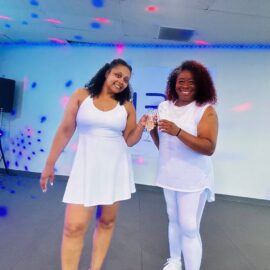 please tell me your names and let our readers know what the name of your business is.
 DA: Well, my name is DeAndra Adams.
RJ: Mm hmm. And I’m Regina Jones.
DA: The name of our business is Vibe Fitness Studio/VIBE which is an acronym for vibrantly influenced body expression.
Mo: Awesome. Oh, I love that. Okay, so tell us about VIBE. What products and/or services do you offer our community?
DA: Well, we are a boutique fitness studio, um, and the goal behind opening a space for people to feel comfortable and come in and just be themselves and vibe out really was the goal. Me and my sister have been in the fitness industry for over 12 years now. We’ve seen a lot, heard a lot, been through a lot. So, we took all of those experiences over the years and learned from them so that we could build a foundation that was welcoming in the community. We specialize in dance fitness. We have all different types of dance fitness within the studio, but we do have a specialty class that kind of caters to conditioning, strength and toning, which is called Trap Vibe, and its booties, bellies, and bands.
Mo: Fun!
DA: So, they do some little hand weights in there. They use the fitness bands, but they do little mix of cardio dance, too, just for the cardio aspect.
Mo: I love that. Oh, that just sounds like a vibe, yes! I mean, all pun intended, but it just sounds like a good time, you know? What inspires you ladies to pursue that passion?
RJ: I think it’s just continuing with our community who’ve we been serving this whole entire time. But we wanted to switch it up. We wanted to add. We wanted to be free to teach what we wanted with no restrictions, no code of conducts, no rules. Just, you know, get certified and just teach everything.
Mo: Right. Healthy fun!
Rj and DA: Yeah, Healthy fun.
Mo: So, 12 years, you’ve learned from your experiences. Y’all said, hey, you know what? We want to connect to our community. This is a way to continue that. I have had experience as an entrepreneur, and I know how tough it can be. You’re going to have those ups and downs, but being a business owner, we know it is not easy, right? It’s humbling and it’s worthy and it feels good. Please share what practices you have, what you use to keep grounded and stay positive?
RJ: Each other.
DA: Yeah. Absolutely.
Mo: Sure.
DA: We have me and my sister first and foremost, but then we have a core team of ladies. I think we’ve built that sisterhood and we support each other so much. You know, we’re always there to pick each other up, whatever life throws at us. As far as the business aspect goes, I think, it can be stressful.
Mo: Yeah.
DA: But I think just the open communication and a lot of years of us just being together through things. It’s made it really seamless to kind of get through those challenges that we faced business wise.
Mo: That’s beautiful.
RJ: A lot of brainstorming and ideas. I mean the more people- the more ideas and we could just try and figure out how we can incorporate that into the fitness studio.
Mo: I love that. So, listening to your community- not just being something available to them- but hearing their ideas and saying, oh, we can do that. Yeah. Let’s make that work, especially if you’re going to show up! I love that so, so much. What would you say makes your business different and/or your business model unique?
RJ: No restrictions.
DA: Yeah, that’s one of them. I will say this. You’re going to walk into a big box gym and hit a group X schedule and, you know, you’re going to find dance fitness in any of these big box gyms, whether it’s LA Fitness, Crunch Fitness, however, what makes our space unique is the fact that we provide an experience every time. We’re not just class- based, we do events monthly. Those events are themed. They’re going to come with food. They’re going to come with beverages. Sometimes they’re 21 and over.
Mo: Sure.
DA: Going back to the no restrictions- we’re all grown. We don’t play edited music in our studio.
Mo: Sure.
DA: I think that is one of a real main difference, because if you walk into a YMCA, you’re not going to hear the things that you’re riding in your car to.
Mo: Right, right. No trap music! {laughter}
DA: Yeah. You’re not hearing that. At VIBE, you will. Another thing that’s going to set us apart is my sister and her specialty class: The Southern Soul line dancing class. It’s offered twice a week.
Mo: Awesome. Okay, so now I’m excited because y’all said every month it’s going to change themes. It’s going to be a whole different vibe depending on what you’re into. Do you have any special promotions that you would like to highlight?
DA: So, the other thing is pricing. We’ve kept our costs significantly lower to cater to our community. You can come and drop in at any time for just 10 bucks. We often slang free classes all the time. Why? Because we’re only a year in, It has been very difficult to get people to come in to our doors. I think mostly because, again, we are up against Planet Fitness, Crunch Fitness. The other thing that we do offer is a lot of times with our events, you get that ticketed event, but it comes with a whole table of food.
RJ: Yeah.
DA: Drinks, pictures. You know, if you’re a business person yourself, you want it from marketing.
Mo: Sure.
DA: Everybody signs a waiver, whether they register online or when they walk into our studio. Nothing’s over $20 per either event or class. Depending on what the theme is, some of our events are only 10 bucks per person. So, we’ve kept the cost very low and I think that we strive to make it that way so that people can feel like they can afford to come be themselves. They can come have fun with us, you know.
Mo: When I hear you talk about community- the way you guys do- being comfortable, having fun, that reminds me of the fluidity that you have when you become a homeowner. The things that you’re able to do compared to being in a rental space, is more flexible. I like to always say, you know, ownership may be the goal for many people, right? Although everyone is not ready for homeownership, homeownership is for everyone. Moreover, if you’re in a rental space, make it your home, right? Make it yours. In my yesteryears as a military spouse, every location was not our forever, but our family (together) is what made it a home. And I would love to ask you, ladies, what does homeownership mean to you?
DA: Wow. I would say just off the top of my head, um, Independence and freedom are the two main words that just come to mind.
RJ: Financial freedom.
Mo: Yeah
DA: Exactly.
RJ: To live comfortable.
Mo: Yeah. I, I agree wholeheartedly. So, like I said, home is what you make it, because you can definitely be in the house and nothing is there. It’s not until you start to put in the things and put in your creativity and spill something at one spot {laughter}. Now it’s a home, right? So, to wrap up our conversation today, I have one last question: what do you love the most about your home?
RJ: Hmmmm. Well, it’s my space and I don’t have to have anyone else in there but myself.
Mo: Yeah. Exactly.
DA: Yeah. If we’re talking about our actual home, I’ll go with that part. However, if we’re talking about our business home, it is our space and we can do what we want. When I think back to why we even created VIBE. Coming from the fitness world, there are a lot of rules and restrictions when you get involved in formats; specific formats. So, we’re really big on, you know, go get group fitness certified so that you have the freedom to teach what you want, when you want. In our space, our girls created the Trap VIBE class. You know, one of our girls- Darah- she created that title. She started with just bands. The other two ladies that wanted to do strength and conditioning. All three of them came together and built off of that. We’ve had to put two of them on the schedule because some people can’t come on a Tuesday but they want to go on Thursday or vice versa. But yeah, our home is our home because it’s what we make it and we’re free to do what we want in there.
RJ: You got to come to the studio. It feels really good in there.
Mo: Okay.
DA: It’s a VIBE.
Mo: Please tell our listeners and our readers, how can we follow you guys? What are your socials? What is your contact information? Let us know the details!
DA: Yes, absolutely. You can find our website at vibeoutside.online
TikToK & Instagram: VIBE_body_expression
FB: VIBE Fitness Studio
Mo: Well, thank you so much for sharing and being transparent, as well as, talking home ownership with us. You are always welcome and thank you again, ladies.
DA: Thank you so much for having us.
-
Interview with Sharon Chamber Gordon, CEO and founder of Raising Girls
-
Mo: Well, good morning, Ms. Sharon. Thank you so much for coming in today. We are super excited about learning
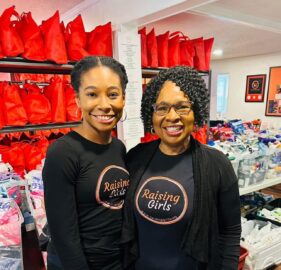 more about Raising Girls! Again, my name is Monique Dorsey. I am one of the housing counselors here at Tacoma Pierce County Habitat for Humanity, and we are interviewing you to learn more about what is available for our residents of Pierce County. So, let’s just dive in! Please let the listeners and the viewers know your name, however you would like to be referred, as well as the name of your business.
 SG: My name is Sharon Chamber Gordon, and I am the founder and CEO of Raising Girls. I wear two hats, however, and I need to talk about that, that I am a full-time real estate agent with Windermere Real Estate. So, I’m doing both things and many other things, but running Rising Girls is really a huge passion of mine.
Mo: Yes, well, we love that. Just knowing that we have a person who we can trust in our community, not just for the young people in many schools throughout Pierce County, but also knowing that you are guiding those who are ready for home ownership through that process is amazing. So, thank you for wearing both of those hats. You’re doing good work and we see you. Please tell us: what products and services do you offer to our community?
SG: Through Raising Girls, we offer full size products for hygiene and sanitary products for both boys and girls to our communities. So, we pack bags that will last a young person up to eight weeks. And in those care bags, we have 10 basic items, some of which are shampoo, conditioner, body wash, deodorant, lotion, toothbrush, toothpaste, wash rags, and those go into boy’s bags. Then for girls- pads and tampons, as well. So, we are making sure that hundreds, if not thousands of students, have what they need to take care of themselves daily.
Mo: That is good work- beautiful work! What inspires you to pursue that passion?
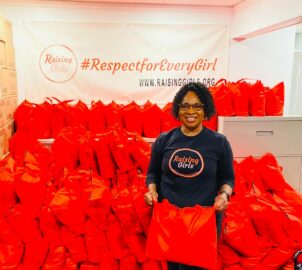 SG: My mom is my role model. We lost her sadly, many, many years ago, but I grew up in Jamaica, and I watched her just love on the community. We didn’t have much, but we had more than some of our neighbors, so she would cook good food and send to the neighbors and I always noticed that she sent a little bar of soap or some toothpaste if we had it- maybe a wash rag if she had it. So, I wanted to honor her and her legacy by giving back to the community. And so, she just spurs me on with her memory. Raising girls is in honor of my mom raising me, and I have my daughter, Amara, so that’s who I’ve been name comes from for raising girls. And so, my mom, and you know, just the wider community inspires me to serve.
 Mo: Yes. I love that, its generational. I like to say: generational wealth isn’t just in assets, right? It’s not just through home ownership, but it’s also through education. It’s what you’ve learned from the person before you: your parent and grandparent, whomever: your aunt, uncle. Right, and then you pass it down to the next generation, and it just continues. So, that is just really, really beautiful. I, too, have been in the space of consumer facing, and I understand, as a business owner, what that work looks like. But I also know it’s super difficult. It can be a roller coaster. You have good days, you have bad days, but you make sure that you’re going to be ready for those days that you know it’s going to be slower. So, with that being said- being a business owner may not be the easiest, but what practices can you share with us that keeps you grounded and stay positive?
SG: One of the main drivers for me is to be consistent. I am not a willy-nilly person. I am type A. So, I would like to plan. I like to write things down and I’d like to make goals that are achievable and some that are aspirational. So, every evening, I will sit down. l I have a calendar that I keep mostly on my phone nowadays, as most of us do and I will look at that calendar for the next day and make a plan for what I need to get done. So, I write things down and I also check things off as my day goes. While trying to stay positive, I always think about the students that we are working with and how as an educator, because I worked at the University of Puget Sound for many years. I worked at the University at Alabama, I worked at Indiana University, so I come from that lens of education and our goal at Raising Girls is to keep kids in school. Each care bag that we pack, I say to my volunteers, pack it with a lot of love because we want to make sure that the kids feel the love and have what they need. So, I stay grounded in the knowledge that we are making a huge difference in the lives of hundreds of young people.
Mo: You definitely are. You and your team and all of those that volunteer is definitely making ground way. And I think, again, just passing that volunteer work is also something that people need to see and feel like, hey, you know what? It’s good, right? You’re doing good work, and that is meaningful. I love that. Do you have any special promotions that you would like to highlight today?
SG: Yes. So, we have our third annual fundraising luncheon coming up on Wednesday, April 29th. Last year we held our second, and had almost 700 people attended the luncheon!
Mo: Wow!
SG: So, we’re anticipating that number again this year. So, that is a huge save the date for us and we we’re working right now. We have our annual retreat tomorrow for my Raising Girls team and we’re going to get a lot of planning for our third annual fundraising luncheon.
Mo: Amazing leadership. I’m sure the leaders that are under you are happy that you are type A and can do all of those things because I’ve seen you firsthand and you do things very particular and that is amazing. I love that. Listening to you, as a realtor and learning more -through this interview- what type of person you are as a leader and your workplace, will translate smoothly to the clients you have through home ownership. I believe it is important to volunteer in community service is and to show up for your people. Which brings me to the question: what does homeownership mean to you?
SG: It means security.
Mo: Sure.
SG: I am a homeowner. I’m grateful for that. My daughter is also a home owner. And when we have a conversation about home ownership, it is made with a lot of gratitude and something that we do not take for granted. We worked hard towards our goals. We sat down, we made a plan to save and to really focus in on what we were trying to accomplish.
Mo: Sure.
SG: So, homeownership means stability. It means that if you have that 30-year mortgage, that amount will remain the same over those 30 years. And so, you know, sometimes we have to rent. We have to rent to get to where we want to go. But home ownership ,for me, means being able to paint the walls. You know, and to do interior renovations and all of that. So, I always looked through the lens of homeownership with a lot of gratitude and something that I never, ever take for granted for my family, for sure.
Mo: I agree. One thing that I like to say is everyone may not be ready for home ownership, but home ownership is for everyone.
SG: Absolutely.
Mo: What do you love most about your home?
SG: My home. You remember- I’m type A? (Both laugh)
Mo: Yes.
SG: So, I love to. All right. So, my thing is, if I am going to pay a certain amount of money each month for a mortgage. I am going to take care of that investment.
Mo: Sure.
SG: All right? So, I make sure that I pay attention, right? In taking care of my floors, you know, wiping down my cabinet and my countertops on a regular basis. What is that practical way to keep your home in a place where your maintenance is consistent? Yeah, right? For example, as a homeowner and as a real estate agent, I say to my clients all the time, and I do it myself, because we have so much water here in Washington State, I have a home inspector that I will hire for one hour, for one per year to go down into my crawl space to take a look to see what’s happening down there because guess what? I’m not going down there.
Mo: Exactly! (Both laughing)
SG: Right? I’m not going down into my crawl space, in my attic, so I will that’s something practical that I do. I also make sure that the major systems are working well. So, my furnace, which I’m very grateful for this time of year- I’m sure all of us are- my water heater, I want to make sure that those are serviced and taken care of because when they break down, those are huge purchases. But if you have your furnace service and you change your future regularly, that extends the life for those things. So those are the kind of practical things as a homeowner that I pay attention to. In the spring, I walk around my house and I look at the little holes through for the crawl space to make sure that those wire mesh is still on. So, pests won’t get inside there.
Mo: Right.
SG: So, it’s being practical as a homeowner to care for what you have been given.
Mo: Yes. I love that. If I am hearing that right, what you’re saying is home ownership to you is that it’s yours and because it’s yours, you want to take care of it. You want to, you know, take care of your asset. So, I think that’s an amazing segue to wrap up our interview. I know this was mini, but it was so full. And I’m sure our readers and listeners will be grateful for the information: the value that you put into this interview. How can our listeners and readers find you?
SG: So, I have Raising Girls, so website is easy: Raisinggirls.org. You can find us there. We are on social media, Facebook, Instagram, LinkedIn, and also on the realtor side: LiveLoveTacoma. I claim that that link. So, LiveLoveTacoma is where you can find me and I work at Windermere Real estate as well.
Mo: Awesome. Well, thank you so much for joining us today. You’re amazing. I’m super excited for people to volunteer through Raising Girls or if interested in homeownership- contact you at Windermere, so thank you so much.
SG: You are welcome. Thank you.